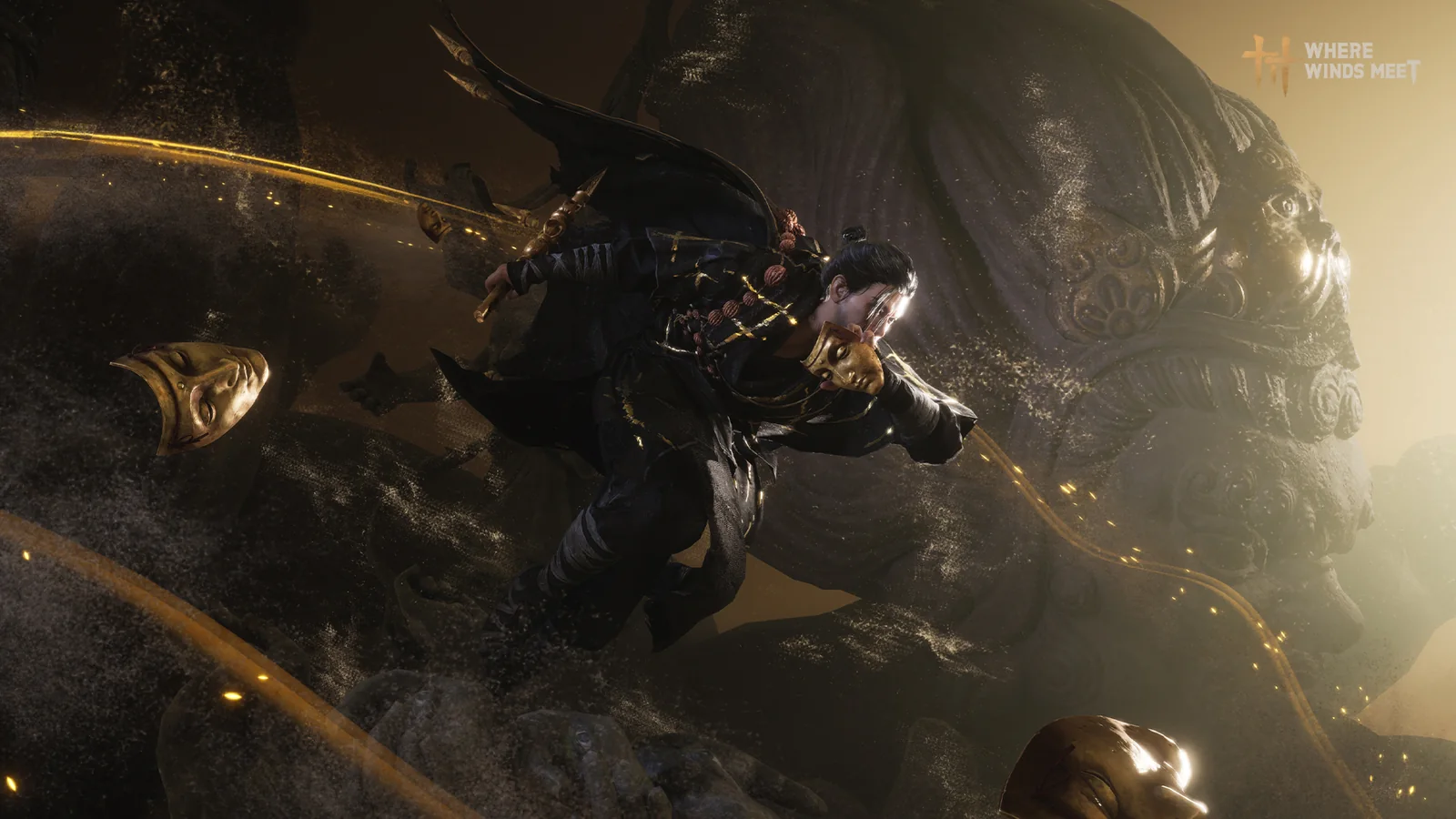
For the first ten hours of Where Winds Meet, keep progression narrow: advance the main chapter, learn deflection and dodge timing, develop one compatible two-weapon plan, and upgrade only the Inner Ways and supporting systems that serve it. The open world is full of stories and activities, but sampling everything at once can leave combat progression fragmented.
- Pick the starting weapon whose rhythm you can execute reliably; other options can be explored later.
- Learn enemy telegraphs and deflection before trying to out-level every boss.
- Develop one two-weapon pairing and matching Inner Ways.
- Keep a ranged, healing or control option available if your main style lacks it.
- Follow the main chapter until key systems are introduced, then explore in loops around Boundary Stones and current objectives.
- Test new Martial Arts and Mystic Skills before investing heavily.
- Re-read live skill text after balance updates.
Your first weapon is a learning choice
Where Winds Meet is built around varied Martial Arts rather than a permanent class lock. Official developer interviews emphasize weapon variety and the ability to equip two types at once, creating combinations for different encounters.
Choose your opening weapon by feel:
- Can you recognize the end of its attack strings?
- Can you stop attacking in time to defend?
- Does its range fit your current comfort?
- Does it provide enough safety while learning bosses?
Do not restart because a tier list ranks another weapon higher. Balance changes: the official May 2026 adjustment, for example, modified multiple weapon paths, Dual-Weapon Skills and Inner Ways. The current client is the source of truth.
Combat fundamentals before build optimization
Read the enemy, then commit
Enter a new encounter with the goal of identifying attacks. Use light commitments until you know which sequence ends safely, which cue calls for deflection, and which attack requires distance or another response.
After a successful defense, use a short reliable punish first. Longer skills belong in openings you understand. If a boss changes behavior, return to observation instead of forcing the old rhythm.
Do not confuse Defense and Deflect
Defensive systems and their costs vary by weapon and current skill text. A held defense can stabilize unfamiliar pressure; a timed deflection can create a stronger opening but demands precision. Practice both. The best response is the one supported by your equipped Martial Art and enough remaining endurance to survive the next sequence.
Use two weapons as one plan
A useful pairing covers weaknesses or enables a shared mechanic.
| Primary need | Secondary answer |
|---|---|
| Strong close-range pressure | Range, healing or safer neutral |
| Slow, heavy commitment | Faster response or mobility |
| Single-target focus | Area control |
| Damage-focused kit | Sustain or defensive utility |
Do not split every upgrade equally by default. Keep the primary style ready for current content, then raise the secondary enough to perform its job.
Align Martial Arts, Mystic Skills and Inner Ways
Think of the build in layers:
- Martial Arts define the weapon moves and core combat rhythm.
- Mystic Skills provide additional tactical tools and wuxia abilities.
- Inner Ways modify or support particular mechanics.
Read the trigger language literally. If an Inner Way refers to a specific Martial Art, status or defensive action, confirm that your active pairing can produce it. A high-grade upgrade that rarely triggers is weaker than a modest effect used constantly.
The May 28, 2026 official balance notice demonstrates why this matters: it changed base effects, tiers, damage, healing and interaction rules across paths. Before spending scarce development resources, compare the in-game description with the action you actually use.
Upgrade in milestones
Bring the main damage and survival layers to the point required by current story encounters. Then stop and test. If damage is adequate but you fail to survive, do not continue adding only offense. If an Inner Way’s trigger never occurs, fix the pairing rather than its level.
Explore without losing the progression thread
Use the main chapter as the route connecting regions and systems. Around each active area:
- activate the nearby Boundary Stone or travel point;
- complete the main objective;
- collect obvious nearby resources and stories;
- investigate one or two activities that reward your current build;
- return to upgrade only when inventory or a combat gate makes it useful.
This creates compact exploration loops. It also prevents a long trip back through content that was discovered before you understood its reward.
The world supports far more than combat, including traversal abilities, professions and social activities. Treat these as deliberate branches. Follow what interests you, but keep one visible next story or combat milestone.
A first-10-hours progression checklist
- Finish tutorial encounters without skipping defensive practice.
- Select a weapon whose attack commitment you understand.
- Test a complementary second weapon before committing scarce upgrades.
- Equip Inner Ways whose triggers match the pair.
- Put one sustain, control or escape option on the active bar if available.
- Advance the main chapter each session.
- Activate travel points on the route.
- Revisit a difficult enemy after changing only one part of the build.
- Read current event and shop rules before spending limited currency.
Diagnose a boss wall
Use this order:
- Telegraph: Which attack actually causes the failure?
- Response: Is the correct answer deflect, defense, dodge, distance or interruption?
- Resource: Are you entering the sequence without enough endurance or healing?
- Build: Do Inner Ways and Mystic Skills activate with the equipped pair?
- Progression: Is gear or a relevant system materially behind the story target?
Record one answer, make one change and try again. Randomly swapping the entire build hides the lesson.
Mistakes to avoid
Treating the first weapon as permanent. It defines the opening rhythm, not the entire account.
Upgrading unrelated Inner Ways. Build around triggers you can actually produce.
Mashing through enemy turns. Long animations are commitments; learn when they fit.
Exploring without a return plan. Anchor loops around travel points and current objectives.
Using outdated numeric builds. Official patches can change base effects and tier bonuses.
Building only damage. Sustain, endurance and control determine whether damage can be delivered.
FAQ
What is the best starting weapon?
The best first choice is the one whose range, speed and defensive rhythm you can use reliably. Weapon balance changes and other Martial Arts can be explored later, so avoid treating the choice as a permanent class.
Can you equip two weapons?
Yes. Developer interviews describe two weapon slots and combinations intended to handle different encounters.
What are Inner Ways?
They are build components that support or modify combat mechanics. Match their current trigger text to your Martial Arts and play pattern.
Should I complete every side activity immediately?
No. Activate convenient travel points and complete activities that interest you or support the current build, while keeping the main chapter as a progression spine.
Sources
Accessed August 27, 2026
- Where Winds Meet official websitecurrent official product and news destination
- Version 1.7 Path Balance Adjustmentcurrent examples of Martial Art, Dual-Weapon Skill and Inner Way changes
- NetEase launch announcementdeveloper, release and combat positioning
- Developer interview on wuxia combatquoted developers on weapon variety, dual slots and design goals

Ethan Cole is Clutchrig's fictional guides persona, used for practical game guidance focused on clear progression routes, efficient resource use, current documentation, and verified sources.