Verdict: Where Winds Meet delivers an unusually generous wuxia fantasy: elegant weapon styles, aerial movement, solo exploration, co-op activities and a map crowded with stories and diversions. Its abundance is also the main defect. Menus, currencies, upgrade tracks, minigames and online systems compete with the clean fantasy of becoming a wandering martial artist. It is worth playing for free, but enjoying it requires learning to ignore content rather than trying to complete everything.
There is no numerical score here. This is a researched assessment of the live game, not a Clutchrig hands-on review.
Methodology: Research was completed on August 27, 2026 using Everstone and NetEase’s official global-launch, cross-platform and Version 2.x communications, plus published hands-on reviews from IGN, GamesRadar+, Pocket Tactics and technical coverage from Digital Foundry. We did not play or benchmark the game. Digital Foundry’s cited video was sponsored and is used only as disclosed technical context, not an independent buying verdict.
Is Where Winds Meet worth playing?
Yes, if you want a large martial-arts playground and can set your own boundaries. The free entry price buys access to a substantial solo adventure alongside online and cooperative systems. Combat presentation, movement and historical atmosphere provide immediate appeal.
The caution is not a lack of content; it is an inability to prioritize. Published reviews repeatedly describe a game that attempts action RPG combat, MMO progression, stealth, investigations, rhythm activities, card-like debates, building, social play and numerous side systems. Players who enjoy wandering can see generosity. Players who want every mechanic to reach equal depth may see dilution.
What it does well
- Wuxia is embedded in movement and combat. Mystic skills, weapon forms and impossible traversal sell the fantasy mechanically rather than only through costume.
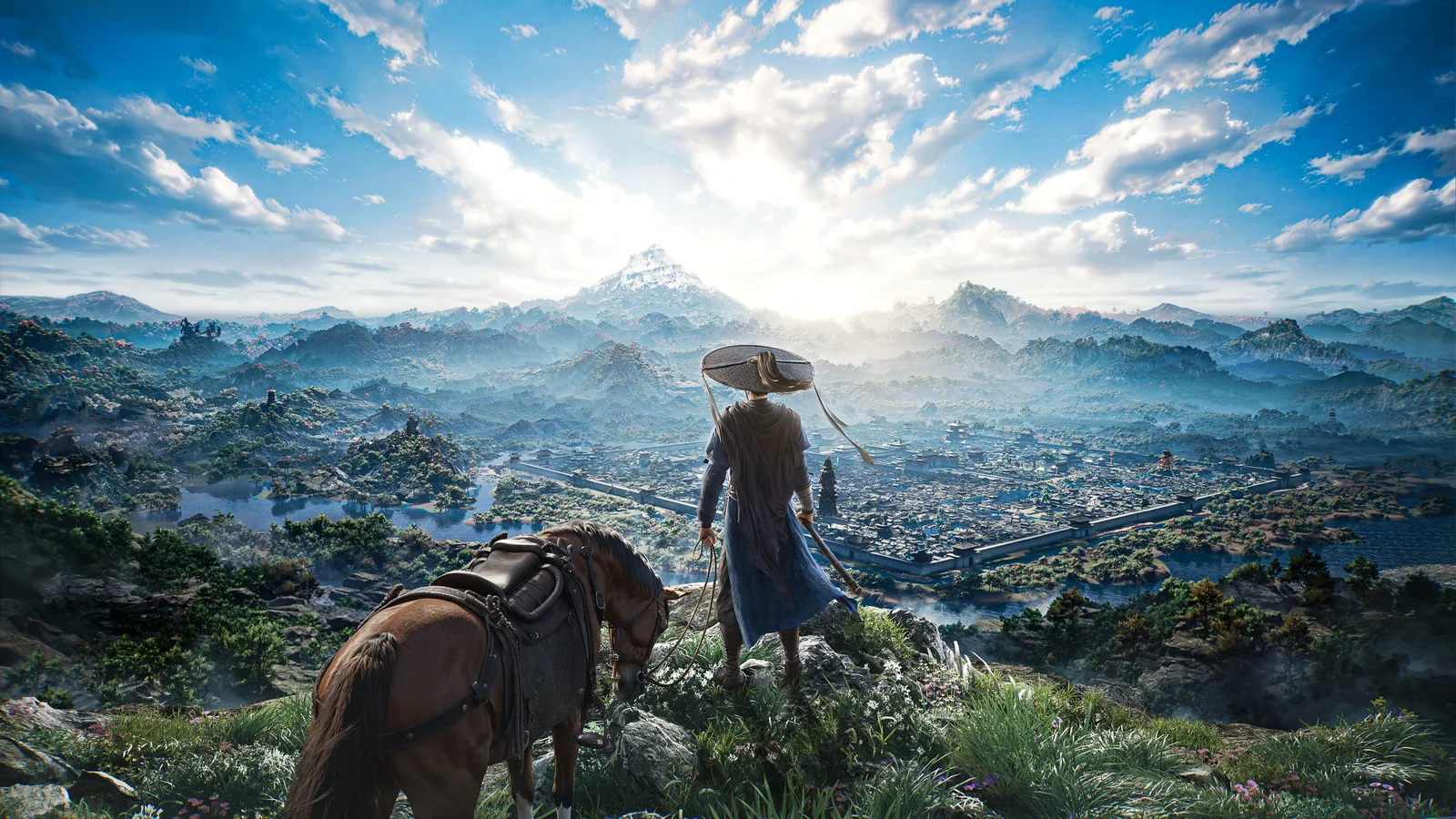
- The world is visually and geographically ambitious. Regions offer towns, wilderness, vertical landmarks and dense activity.
- Solo play is a real pillar. The game is connected and monetized, but it is not merely a lobby for group raids.
- Combat supports different approaches. Weapon pairing, parries, dodges, ranged tools and difficulty choices let players tune the experience.
- Post-launch expansions are meaningful. Version 2.0 introduced Hidden Mountain, and the August 2026 Version 2.1 developer letter described Mohist Hill’s water-rail restoration and server-wide Cloudstair project.
What holds it back
- Interface density obscures the adventure. Reviewers consistently criticize menus, currencies and upgrade systems.
- Narrative momentum is uneven. Strong atmosphere and colorful characters coexist with exposition, tonal detours and a story that can be difficult to follow.
- Many activities are shallow. The world often presents a new interaction before the previous system has developed meaningful depth.
- Monetization repeatedly enters the frame. Battle passes, cosmetics and multiple currencies sit beside an otherwise premium-looking solo RPG.
- Technical quality varies by platform and scene. High-end PC presentation can be impressive, while console and busy-area reports have been less consistent.
Combat: the clearest expression of wuxia
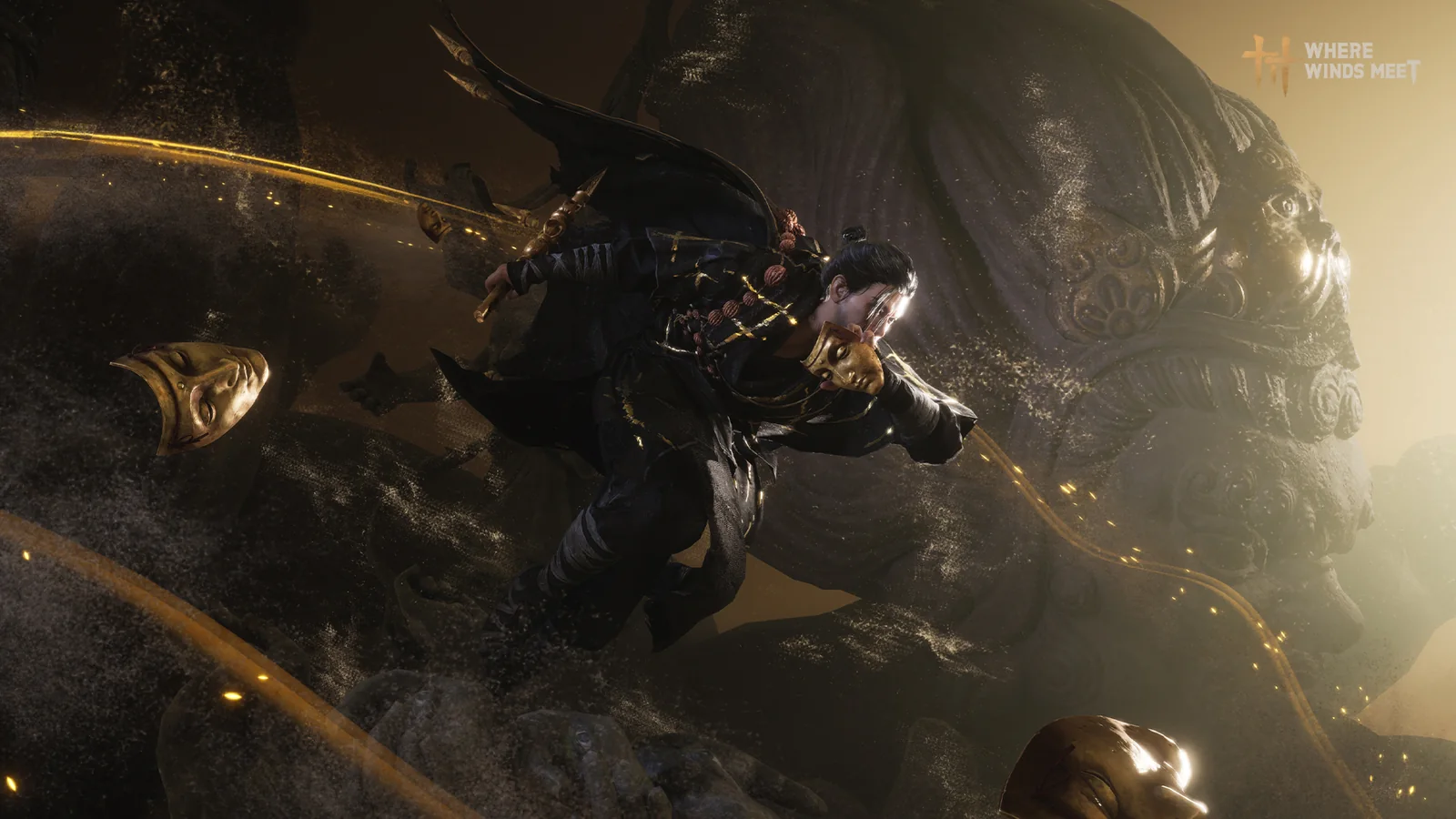
Where Winds Meet’s combat uses weapon styles, martial arts and Mystic Skills to make the player feel less like a conventional armored hero and more like a figure from martial-arts fiction. Parries and deflections reward timing; dodges, ranged options and special techniques broaden the response to groups or bosses. Weapon choice changes reach, cadence and tactical role rather than functioning as a simple damage-stat swap.
The game has often been compared with Sekiro, but that label needs restraint. The parry can be important and some bosses demand focused timing, yet difficulty options and a much wider open-world structure make this a different proposition. It is an action RPG with online layers, not a single-purpose precision gauntlet.
Published reviews are generally positive about the flair and responsiveness of combat while less convinced by every system around it. That distinction matters. A game can have enjoyable fighting without needing every side activity, and Where Winds Meet is better when players treat combat, exploration and chosen stories as the center.
An open world with every idea
The global edition launched with a large historical-fantasy world inspired by tenth-century China. Players investigate mysteries, join or encounter sects, learn abilities through observation, take on professions and find an exceptional number of minigames. Some interactions are playful and memorable; others feel like systems included because an open world could contain them.
GamesRadar+’s review captures the consensus tension: impressive and fun, but bloated by seemingly every videogame idea. IGN’s review similarly praised the understanding of wuxia while arguing that too many half-speed attractions weakened the whole. These are not complaints about insufficient effort. They are complaints about editorial discipline.
The right player response is selective play. Follow a questline that is working, develop two complementary weapon styles and leave unwanted checklist icons untouched. Completionism turns breadth into administration.
Solo, co-op and online identity
Where Winds Meet supports a substantial solo journey while also offering co-op and shared activities. Official cross-platform documentation confirms progress continuity among Steam, Epic Games, the official PC launcher and PlayStation under the relevant account-linking conditions. Mobile supports cross-progression and cross-play; Xbox Series and Xbox on PC joined in June 2026.
That flexible identity is useful, but it creates design compromises. A solo quest can be interrupted by service messaging, while multiplayer progression needs repeatable structures that do not always suit a story-driven adventure. Players should choose the parts they value rather than waiting for the game to declare one definitive mode.
AI-chat NPC systems add another complication. They promise flexible conversation, yet their inclusion has prompted both curiosity and concern about tone, authorship and unpredictable responses. They are a novelty, not evidence that every ordinary NPC interaction has become deeper.
Progression and monetization
Where Winds Meet is free to play. The store and service structure include cosmetic items, battle-pass-style progression and numerous currencies. The business model is less directly character-dependent than a conventional hero gacha, which makes the large solo campaign unusually accessible.
However, monetization can still damage clarity. Reward notifications, upgrade materials and limited activities multiply reasons to open menus. Even when spending does not buy the best combat move outright, the interface can make a martial-arts journey feel like account maintenance.
New players should avoid optimizing every subsystem at once. Pick a weapon pairing, progress the main path until core mechanics unlock, and spend nothing until the currency model is understandable. A free game this large does not need to be “supported” before it has earned sustained attention.
Technical state and platforms
The global PC and PS5 release arrived November 14, 2025, with mobile following December 12. Official pages document cross-progression across PC storefronts and PlayStation, while later releases expanded the ecosystem.
Digital Foundry’s sponsored technical overview found the Messiah Engine scaled strongly on a high-end RTX 4080 PC and examined ray tracing and PSSR on PS5 Pro. Sponsorship requires caution, and that test configuration says little about ordinary hardware. Community reports have also described PS5 performance concerns. Clutchrig has not replicated either finding.
The official Version 2.0 patch notes and subsequent Version 2.1 communication show continuing optimization and content work. “Continuing” is the key word: live support can improve rough areas but also adds regions and systems that demand new testing. Check current platform notes rather than relying on launch-day settings guides.
Who should play it?
Where Winds Meet suits players who love wuxia, exploration and expressive combat; who want a long free solo journey; and who are comfortable choosing among many activities.
It is a weaker fit for players seeking a tightly paced narrative, minimal menus, a finite premium RPG or uniform technical performance across platforms. Completionists should be especially cautious because the game is structured to keep producing goals.
Final assessment
Where Winds Meet’s generosity is real. It offers landscapes, combat styles and diversions that would be difficult to dismiss even in a paid release. Its best moments make the character feel like a legendary wanderer moving through a world with its own customs and impossible rules.
Its excess is just as real. Too many systems ask to be noticed, and their notification logic can flatten wonder into work. The solution is not to wait until the game becomes smaller; Version 2.1 suggests it will continue expanding. The solution is to play it with intent. Follow the wind, not every icon.
FAQ
Is Where Winds Meet free to play?
Yes. The global game is free to play with optional in-game purchases and live-service progression.
Is Where Winds Meet a single-player game or an MMO?
It supports a substantial solo experience plus co-op and shared online activities. It combines identities rather than fitting cleanly into one label.
Does Where Winds Meet have cross-save?
Yes across supported platforms when accounts are linked correctly. Official documentation warns that an account already containing character data may require support assistance before linking.
Is Where Winds Meet like Sekiro?
It shares parry-focused martial combat and demanding bosses, but its difficulty options, open world, online systems and progression make it much broader and less focused.
Is the game pay to win?
The global model emphasizes accessible gameplay and cosmetic/service purchases more than character gacha. Monetization still shapes progression screens and incentives, so current store terms should be checked before spending.
Sources
- Where Winds Meet — official cross-platform account guide
- Where Winds Meet — Version 2.1 developer letter
- Where Winds Meet — official Xbox launch announcement
- Where Winds Meet — official news and Version 2.0 updates
- IGN — Where Winds Meet review
- GamesRadar+ — Where Winds Meet review
- Pocket Tactics — Where Winds Meet review
- Digital Foundry — PC and PS5 Pro technical overview (sponsored)
Verdict
Clutchrig state-of-the-game assessment
Where Winds Meet is worth exploring for its expressive wuxia combat and extraordinary breadth, provided you can tolerate a cluttered interface, inconsistent storytelling and a free-to-play game determined to offer every activity at once.
No numerical score. This researched review synthesizes official launch and Version 2.x materials, platform documentation, and multiple published hands-on and technical assessments. Clutchrig did not perform a hands-on playtest, benchmark hardware, or measure frame rates for this article.

Marcus Reed is Clutchrig's fictional reviews persona, used for evidence-led assessments of design, progression, monetization, and long-term value with clear methodology disclosures.